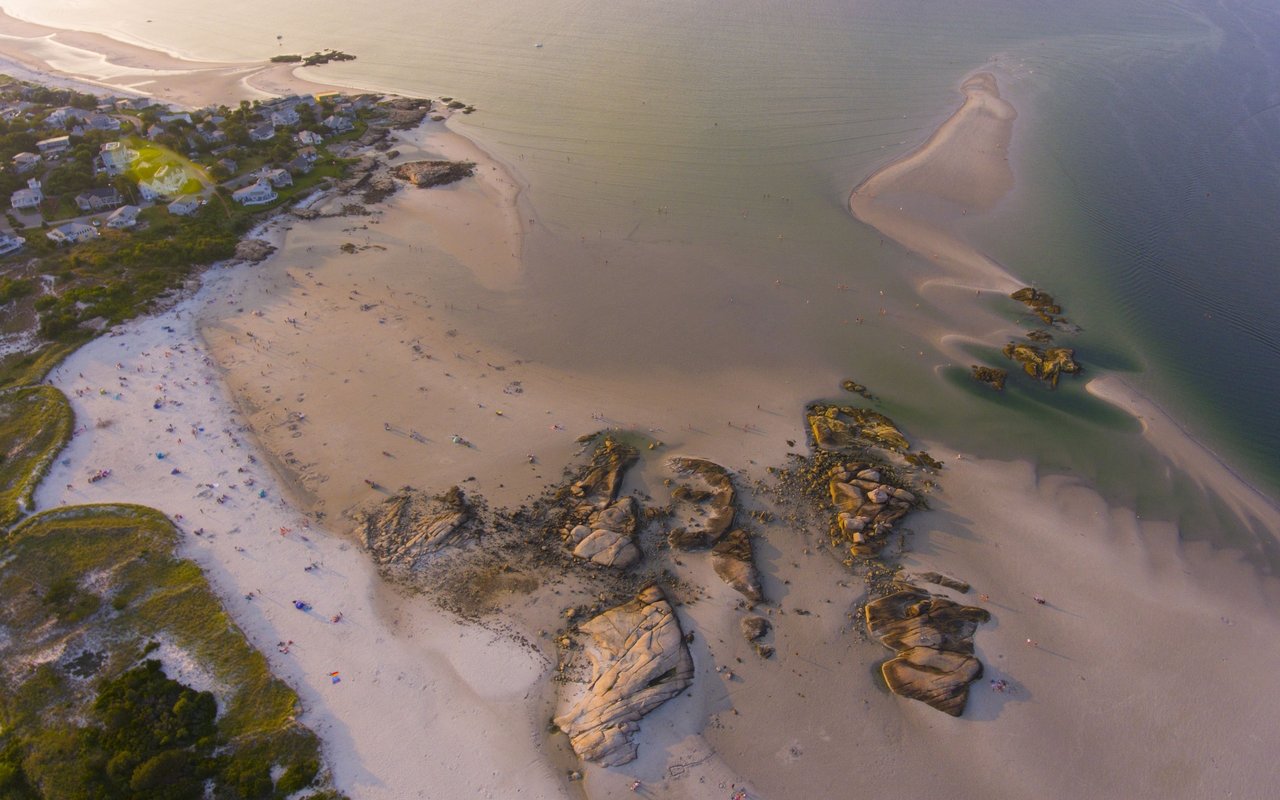
Before you compare Marblehead to Beverly, Swampscott, or Salem, sit with one fact that almost no spreadsheet captures. The town has no commuter rail stop. The nearest platforms sit in Swampscott and Salem on the Newburyport/Rockport Line, and the 16-mile drive to Boston routinely stretches to 45 minutes or an hour at rush hour. That single piece of infrastructure, or the lack of it, is the mechanism behind almost every pricing quirk you are about to encounter.
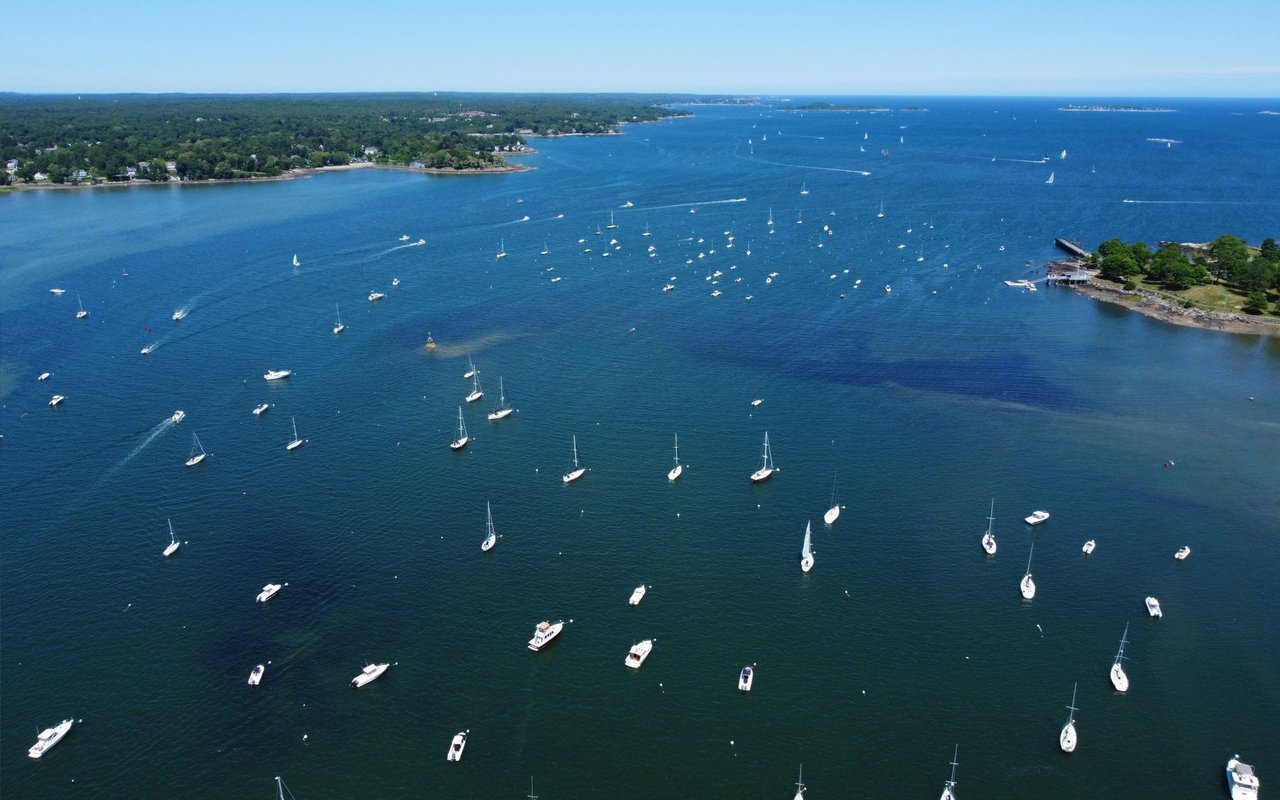
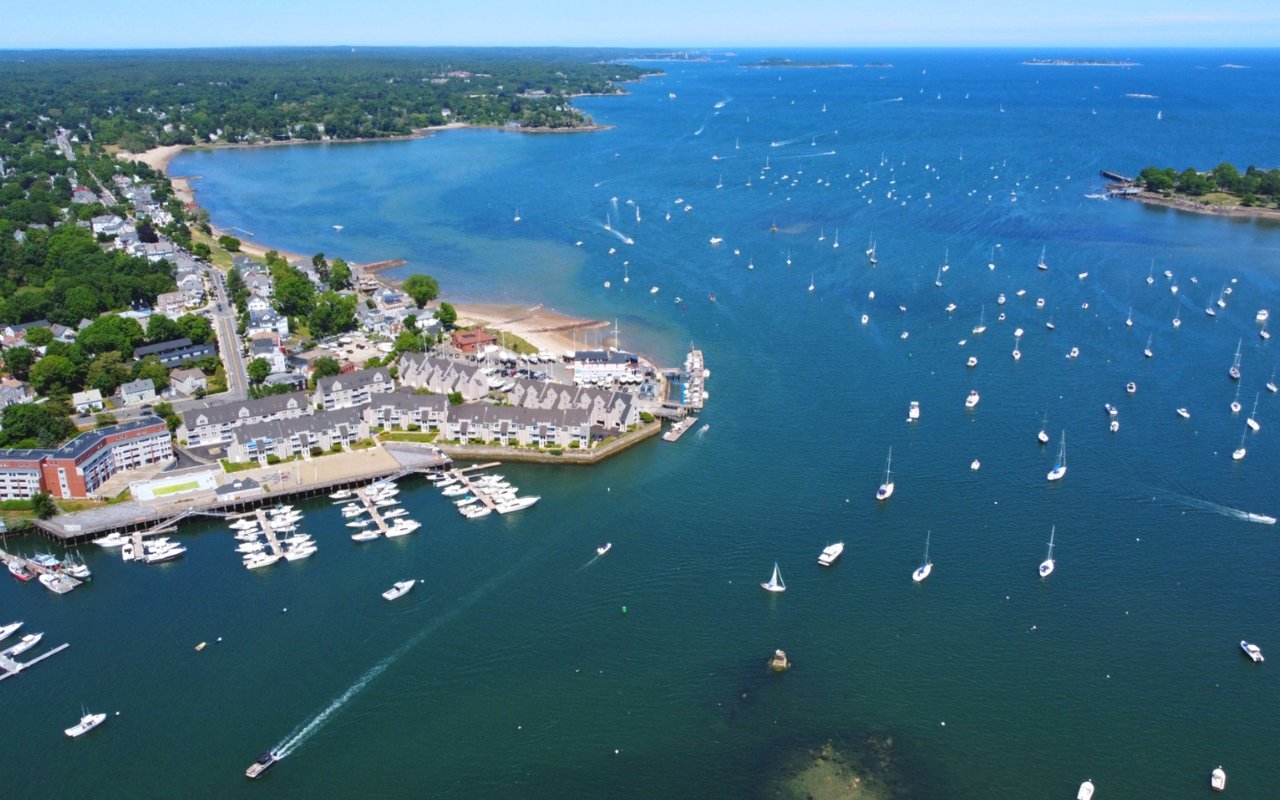
It explains why Marblehead's town-wide median sits below several of its peer coastal towns despite a deeper harbor, six yacht clubs, and a pre-Revolutionary downtown. It also explains why, once you slice the town into its actual villages, the dispersion is wider than the headline number suggests. The median is the average of five different markets, and you are not buying the median.
The Median Hides Five Markets
Depending on the source you read, Marblehead's town-wide single-family number in spring 2026 sits somewhere between $830,000 and $989,500. Redfin recorded a May 2026 Zillow-style index value of $899,462, up 0.8% year over year. Homes.com put the June 2026 median at $927,000 with an average sale price of $1,073,298 and 27 days on market. Movoto logged April 2026 at $989,500 across 36 closings. The spread between those numbers is itself a clue. A small town with this much variance in monthly medians is a town where the mix of what sells, not the underlying value, is moving the average.
Here is how that mix breaks down once you stop treating Marblehead as a single zip code:
| Village | Character of the housing stock | What the data shows |
|---|---|---|
| Old Town | Pre-Revolutionary and Colonial homes on narrow streets, walk to harbor and shops | Historic District median sale of roughly $700K in early 2026 at about $559 per square foot |
| Marblehead Neck | Late 19th-century estates and Shingle-style homes on a connected island | Median home value of roughly $1.47M, among the most expensive enclaves in the state |
| Clifton and Clifton Heights | Queen Anne, Colonial Revival, and Shingle-style homes on elevated lots near Preston Beach | Average around $1.03M at roughly $458 per square foot, very low vacancy |
| Peach's Point | Gated peninsula with oceanfront estates including Seaside Farm overlooking Crowninshield Island | Sales appear in the multi-million range when they appear at all |
| Shipyard District | Renovated antique homes and loft-style townhouses near the harbor | Tight inventory, individual listings reach the high seven figures |
Each of those villages is a separate negotiation. Treat them as one and you will either overpay for the wrong block or pass on the right one because the comp set looked thin.
Old Town Is a Walkability Premium, Not a Square Footage Premium
The Historic District is the part of Marblehead most buyers picture. Streets that predate the grid, plaques on houses built before the Revolutionary War, F.L. Woods still operating on Atlantic Avenue after more than seventy-five years, and a short walk to Crocker Park and Fort Sewall. The median sale price here looks low next to the Neck, but the per-square-foot number does not. Old Town homes trade closer to $559 per square foot because what you are buying is location, not floor area.
The honest framing for a buyer: a 1,400-square-foot antique with original wide pine floors and a single full bath is not underpriced relative to a 3,200-square-foot new build elsewhere in town. It is differently priced. Renovation costs on a pre-1800 home with preservation considerations are not a line item you can solve with a quick refresh. If you want walk-to-harbor living, budget for the home and for the long tail of work that comes with it.
Marblehead Neck Pays for One Causeway
The Neck is connected to the rest of Marblehead by a single sandbar. That is the whole story. Roughly 3.6 percent of American neighborhoods are wealthier, the median home value sits near $1.47M, and the housing stock is largely pre-1939 with significant Shingle-style and Victorian estates along Ocean Avenue and around the Marblehead Neck Wildlife Sanctuary. Three of the town's six yacht clubs, including the Corinthian, are located here.
What that scarcity means in practice: the inventory is thin and lumpy. NeighborhoodScout pegs the Neck's vacancy rate at 9.7 percent, well above average, which sounds like weak demand until you realize most of those vacancies are seasonal second homes held by owners who rarely sell. When a Neck home does come to market, it is often the only one of its kind that quarter. Comparable sales as a pricing tool break down. Buyers who insist on running a tight comp grid will lose to buyers who are willing to price the home on what it is, not on what closed last spring.
Clifton and Clifton Heights: The Quiet Premium
Clifton and Clifton Heights sit in the southwest part of town, bordering Swampscott. The neighborhood originated as a 19th-century summer resort built up by the Ware family around the Clifton House hotel and the arrival of the Eastern Railroad branch in 1839, and the housing reflects that lineage. Queen Anne, Colonial Revival, and Shingle-style homes share blocks with mid-century additions and a small set of newer infills. Tedesco Country Club anchors one corner. Preston Beach and Hobb's Playground anchor another. Glover School draws families.
Pricing here clusters around an average of $1.03M at roughly $458 per square foot, with a competitiveness score of 89 out of 100 and a 0.6 percent vacancy rate. That vacancy number is the one to circle. Clifton homes change hands rarely, and when they do, they move quickly and at or above ask. A buyer comparing Clifton to Old Town on price per square foot is missing the structural fact that there is almost no inventory pressure to negotiate against.
Peach's Point and the Shipyard: Two Different Kinds of Scarce
Peach's Point is a private road and association on the north side of town, with oceanfront frontage looking out toward Crowninshield Island, Grace Oliver's Beach, and Marblehead Lighthouse. When something like Seaside Farm, the 1999 Georgian that replaced the original Crowninshield estate, comes to market, it sets its own comp. There is no other market for it inside Marblehead.
The Shipyard District is the inverse kind of scarce. It is smaller, more urban in feel, and built up with renovated antiques, loft-style townhouses with ten-foot ceilings, and waterfront condos at Glover Landing. Inventory turns more often than Peach's Point but is still constrained. Buyers who want to be near the working harbor without committing to a pre-1800 antique often end up here, and they pay accordingly.
A Buyer's Framework
If you are choosing Marblehead, you are not choosing one market. You are choosing one of five, and the question that should drive the decision is which kind of scarcity you are willing to pay for: walkability and history in Old Town, the causeway and the yacht clubs on the Neck, the quiet and the elevation in Clifton, the gate at Peach's Point, or the harbor adjacency of the Shipyard.
The town-wide median is a useful sanity check for what Marblehead is, in aggregate, worth in 2026. It is a poor tool for setting a budget. The village sets the budget. The home you can buy with $1.1M in Old Town and $1.1M on the Neck are not the same home, not even close, and the gap is not closing.
A Few Questions Buyers Keep Asking
Why does Marblehead trade below comparable harbor towns with rail access? The absence of an in-town commuter rail stop is the single largest structural factor. Buyers who need to be on a train five days a week tend to choose Swampscott, Salem, or Beverly. That self-selection compresses Marblehead's demand pool relative to its amenities and keeps the median lower than the housing stock alone would suggest.
Is waterfront inventory actually thin, or does it just feel that way? Both. As of spring 2026 there were 22 waterfront listings in town at a median list price of $1.11M, which is not a large number relative to the size of the town and its nine miles of coastline. The lumpiness matters more than the count. Three closings in a single quarter can move the per-square-foot number visibly.
How much should a buyer weigh seasonal vs. year-round mix by village? On the Neck, materially. The 9.7 percent vacancy rate signals a significant share of second-home ownership, which affects how listings come to market, how negotiations are paced, and how often a neighbor is around. In Old Town and Clifton, the year-round share is much higher and the rhythm of the street reflects that.
If you are weighing Marblehead against the rest of the North Shore and want a read on which village fits the budget, the timing, and the kind of home you actually want to live in, the team at Nest | Syndi Zaiger Group works this market village by village. We are happy to talk through what is on, what is coming, and what the median is not telling you.